A Simple Winter Check for Western PA Homeowners
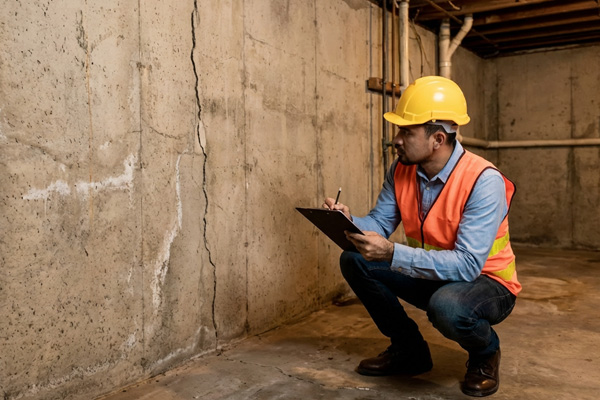
Late November, you carry the holiday boxes up from the basement. Your eye catches a crack in the wall. Was it always there? Has it grown?
No, we won’t tell you most basement wall cracks are an emergency. A few are. The crack’s shape, where it sits, and whether it grows can tell you which kind you have. A pencil, a tape measure, and a few minutes this month will show you.
First, the Good News
Many cracks are cosmetic. They come from concrete and mortar drying and curing, not from a failing foundation. You can live with them for years.
They can still let water in, though. A dry, stable crack and a damp one call for different answers.
What Do Basement Wall Cracks Mean? Three Shapes, Three Stories
Basement wall cracks come in three main shapes. Vertical cracks are the most common and usually the least serious. Stair-step cracks follow the mortar joints in block walls and often point to settling. Horizontal cracks deserve real attention, because they usually mean soil is pushing the wall inward.
Vertical Cracks
A vertical crack runs straight up and down, or close to it. If it stays the same width and doesn’t grow, it is usually cosmetic. Keep an eye on it for two things: growth and water.
Stair-Step Cracks
In a block wall, a crack can zigzag along the mortar joints like a staircase. This often means part of the foundation has moved, usually from foundation settling. Fresh mortar alone won’t solve that. Our repointing page explains why open joints along a stair-step crack point to a foundation problem, not a mortar problem.
Horizontal Cracks
A horizontal crack runs along the length of the wall, often near mid-height. This is the one to call us about. The home inspectors’ association InterNACHI links horizontal cracks in foundation walls to two causes. One is poor backfill. The other is wet soil that swells or freezes against the wall.
Left alone, a horizontal crack often leads to bowing basement walls. When we catch it early, wall anchor systems are often the fix.
Where the Crack Sits Tells You More
The location of the crack adds important information. Note whether the crack sits near the top of the wall at ground level, at mid-height, or near the floor. Then check which end is wider. A crack that is wider at one end means part of the wall moved more than the rest.
Inspectors read the same clues. InterNACHI’s inspection guide notes that settling can leave a crack wide at one end and hairline-thin at the other. Write your answers down. They help an inspector read your wall faster.
Why Do Basement Wall Cracks Get Worse in Winter?
Winter tests every crack. Wet soil expands when it freezes, and that pushes on your foundation. When it thaws, water finds any opening. Western PA clay holds water well, so our winters put steady pressure on basement walls. A crack that grows this winter is showing you real movement.
North Dakota State University Extension explains that very wet soil expands as its water freezes. That frost heave can push on foundations and basement walls. The National Weather Service in Pittsburgh says our first freeze typically falls in mid-October. The first hard freeze usually follows in late October or early November (it was October 18 in 2026, as recorded at the Pittsburgh International Airport). By the time the holiday boxes come up, your walls have likely felt the cold.
Our July article explains how water damages your foundation. One simple step helps right away: make sure your downspout leadoffs carry roof water well away from the house.
How to Monitor Foundation Cracks: The Pencil Test
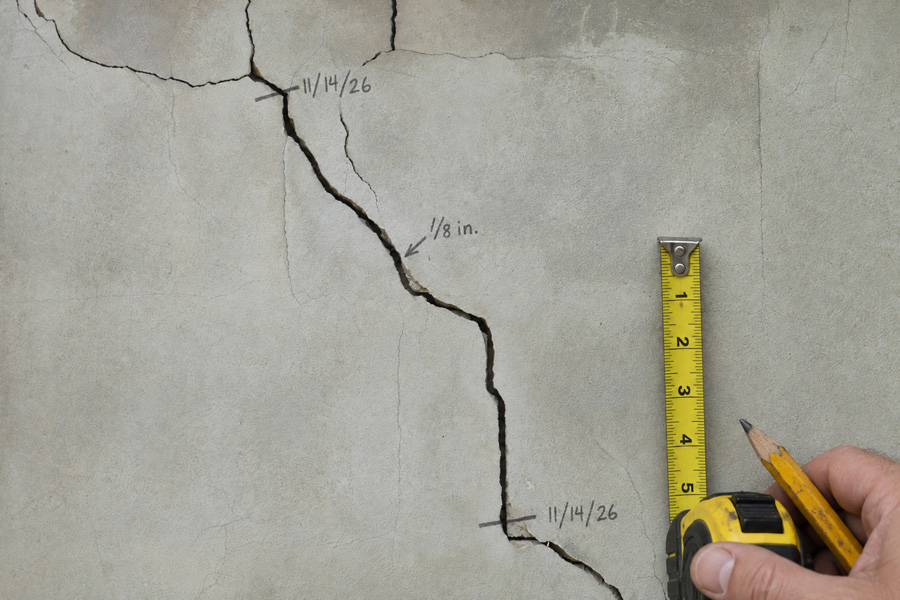
The pencil test is the simplest way to monitor foundation cracks at home. Mark the ends of the crack, date the marks, and take a photo. Then check again through the winter. If the crack grows past its marks, the wall is still moving, and it’s time to call.
- Draw a short pencil line across each end of the crack. Write today’s date beside each line.
- Measure the width at the widest point. Write that number on the wall in pencil, too.
- Take a photo with a tape measure held next to the crack.
- Check again every few weeks. Also check after hard freezes, thaws, and heavy rain.
- Compare in early spring. A crack that passes its marks, gets wider, or gains new cracks nearby is moving.
Professionals track cracks the same way, sometimes with a gauge fixed across the crack. Your pencil marks do the same job.
When Should You Call Instead of Wait?
Don’t wait for spring if you see any of these:
- Any horizontal crack
- A wall that bows, bulges, or leans inward
- Blocks that have shifted out of line
- A crack that grows past its pencil marks
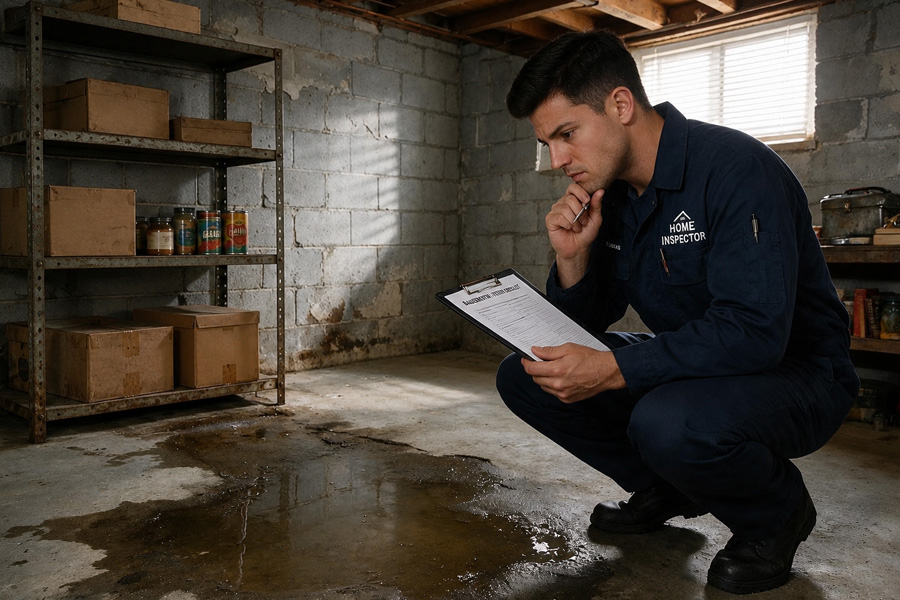
- Water coming through a crack
Matching the Fix to the Crack
The right repair depends on what the crack is doing. Here is how the common fixes line up:
- Crumbling or damp block faces: parging and sealing restores the wall’s surface.
- Open or failing mortar joints: repointing replaces worn mortar with fresh mortar.
- Horizontal cracks and early bowing: wall anchor systems hold the wall and can gradually pull it back toward straight.
- Walls pushed too far for anchors: steel I-beams brace the wall from the floor to the joists.
- A sinking corner or settling footing: piering supports the foundation from below.
- Water through a crack: the answer may be sealing, or drainage such as an interior French drain.
Many homes need only one of these. Some need none. You can see every option on our foundation repair page.
A Free Inspection, an Answer That Makes Sense
D-Bug Waterproofing has worked on Western PA basements since 1980. That’s 45+ years with the same clay soil, hillside lots, and freeze-thaw winters. We’re family-owned, and our own trained crews do every job. We never use subcontractors.
A free inspection gives you a straight answer. We measure what your wall is doing and tell you what it needs, if anything. Our pricing comes with no surprises.
Seeing a crack that grew, a horizontal crack, or a wall that leans? Call 1-855-381-1528 or request a free quote online.
Basement Wall Cracks: Common Questions