
Why the Puddle You Mop Up Is Only Half the Problem
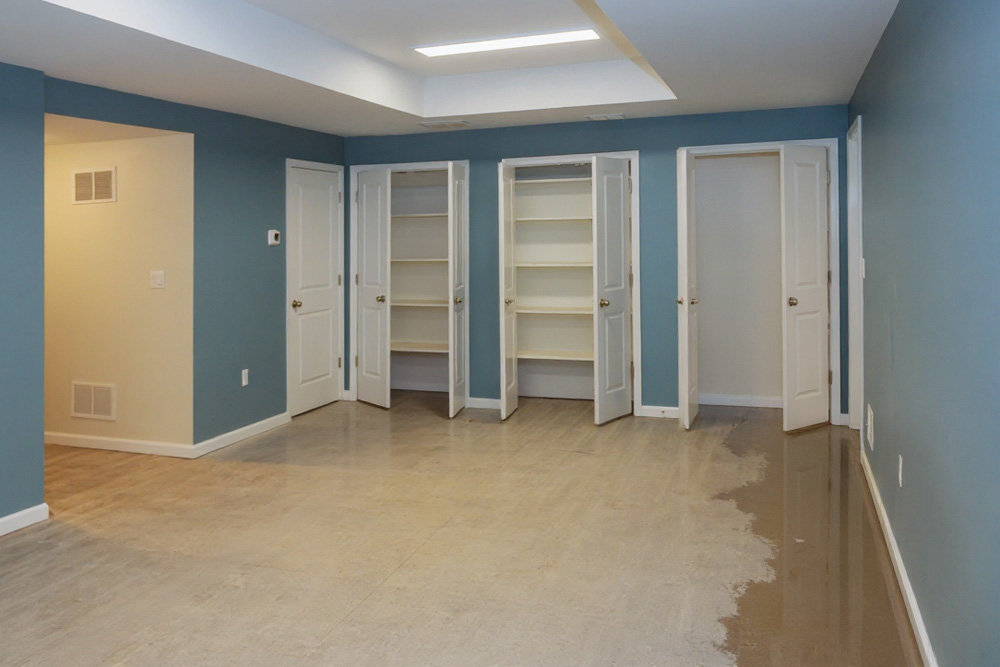
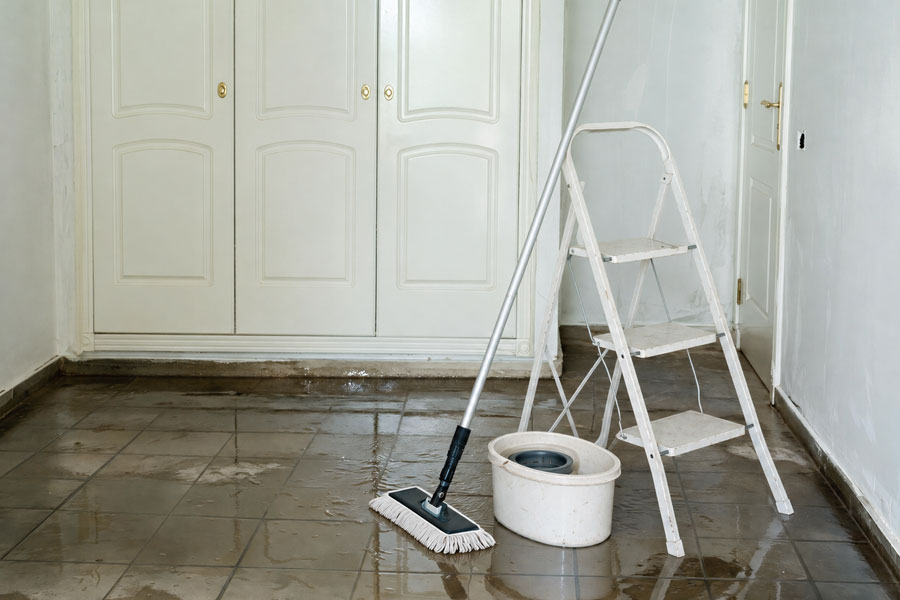
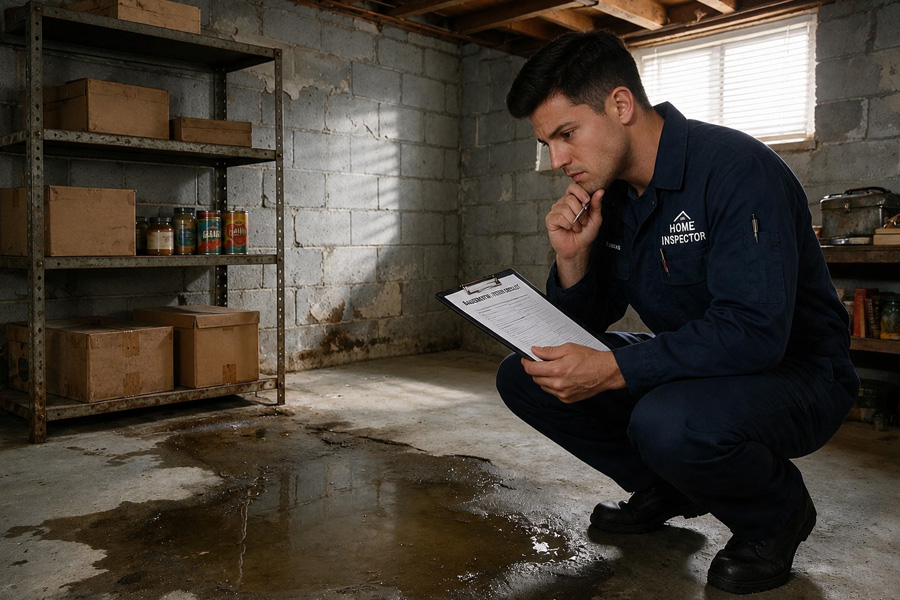
You walk downstairs after a hard rain and find water on the basement floor. You grab the shop vac or the mop. Twenty minutes later the floor looks dry, and you move on with your day.
That puddle feels like the whole problem. It isn’t. The water you see is the easy part. The water you can’t see has been working on your foundation for months, maybe years.
At D-Bug Waterproofing, our crews have been invited into thousands of Western Pennsylvania basements. The story is almost always the same. The homeowner points to the floor. We point to the walls. That is where the real damage lives.
The Puddle Is a Symptom, Not the Problem
Water on the floor is what you notice. It is annoying, but it mops up.
The damage to worry about is happening in the walls. Your foundation walls. Your footings. Even the soil and earth around your home. All of that takes a beating from much more water that you see in that puddle, and it’s still out there. You clean the floor. The pressure outside keeps pushing.
Think of the puddle like a fever. The fever is real, but it is a signal. Something bigger is going on underneath.
How Water Undermines a Foundation (the Western PA Version)
Unfortunately, our Western Pennsylvania climate gives foundations a hard time. There are four main points to it, and here they are:
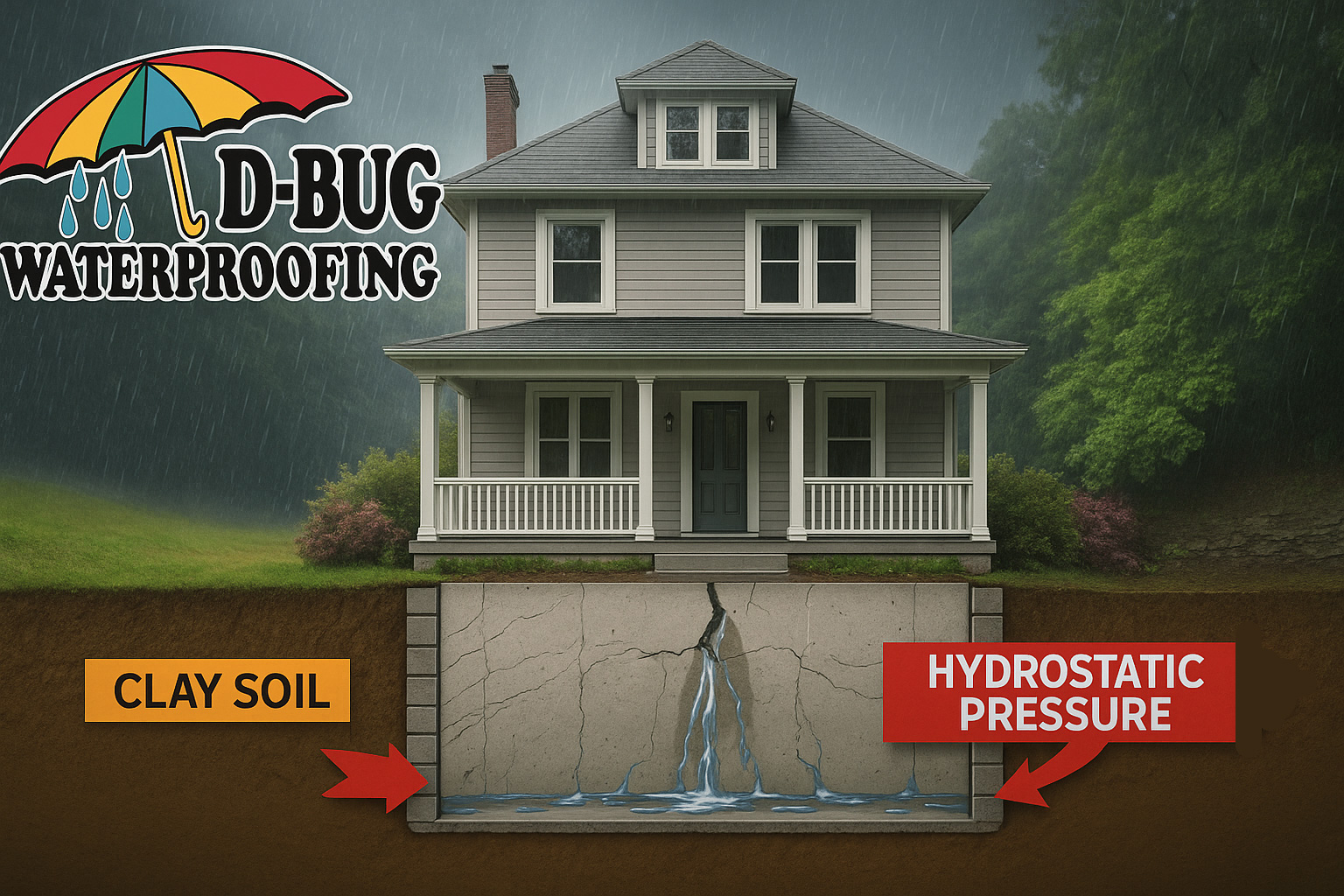
- Clay soil swells. Much of Western Pennsylvania sits on heavy clay. Clay soaks up water like a sponge and swells as it fills. That swollen soil pushes hard against your foundation walls.
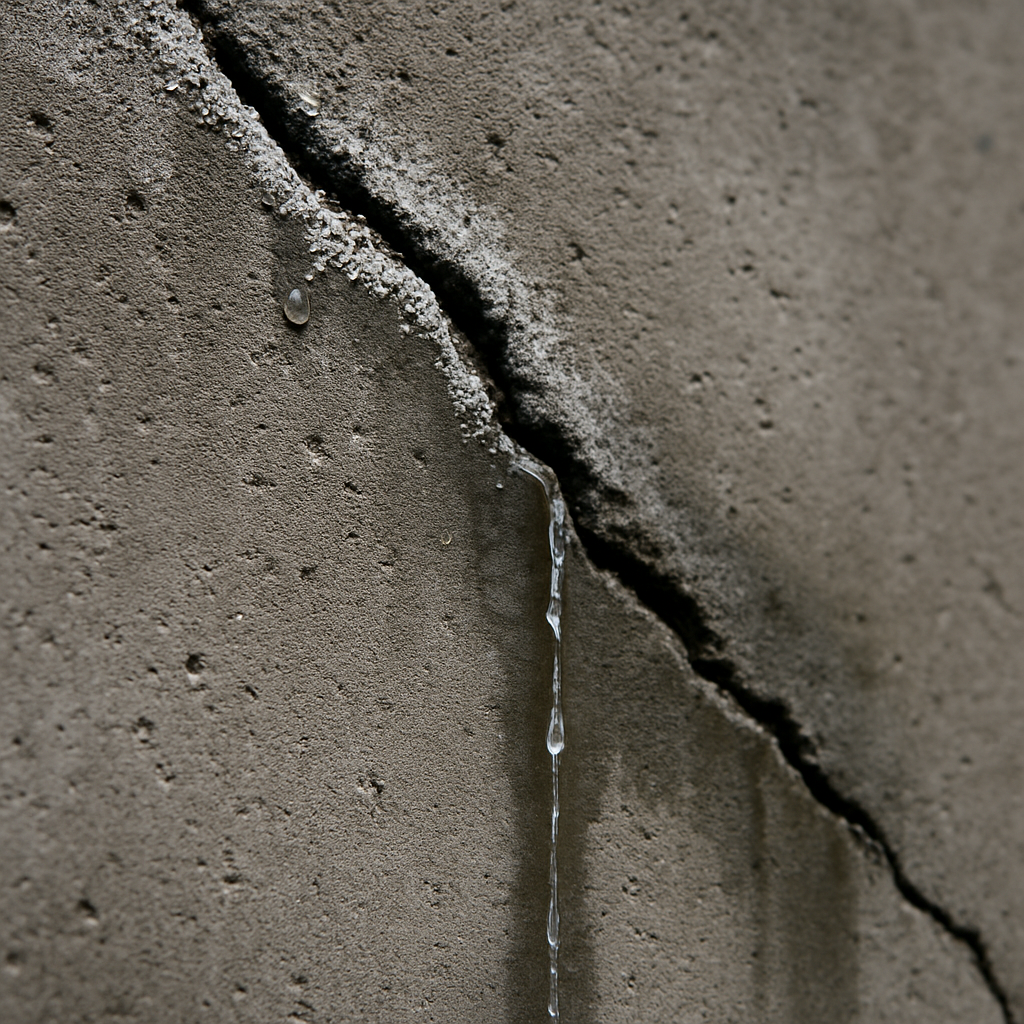
- Freeze-thaw pries things apart. Wet soil freezes in winter and expands. Then it thaws and settles. Every cycle widens the small cracks already in your walls. One winter can turn a hairline crack into a small gap.
- Hydrostatic pressure builds. Saturated soil presses on your walls and floor with real force. That pressure finds every seam, joint, and crack. n Western PA’s clay soils, saturated conditions can exert 40–60+ psf per foot of depth laterally on foundation walls. (That’s the kind of force a submarine experiences at 300 feet below the surface.)
- Washout steals support. Moving water carries soil out from under your footings. It also rots hollow block where it meets the footer. When the ground under a foundation disappears, the house settles into the empty space.
Two Ways Foundations Fail From Water
Water breaks foundations in two different ways. Knowing which one you have matters, because each needs a different fix.
Pressure pushes walls in. Wet, swelling soil shoves against the wall from outside. The wall bows inward. Horizontal and stair-step cracks appear. This is a push problem.
Washout pulls a foundation down. Water washes the soil out from under the footing. The foundation loses its support and sinks. Vertical cracks open, and floors go uneven. This is a drop problem.
One is pressure. One is settlement. The story of your home may point to one story or the other, sometimes both.
The Signs Inside Your Home
Your basement and your living space both talk. Here is what to listen for.
- Cracks in basement walls, both horizontal and stair-step
- Cracks in the basement floor
- Walls that bow or lean inward
- Doors and windows that stick or won’t latch
- Floors upstairs that feel uneven or sloped
A sticking door seems minor. It often means the frame shifted because the foundation moved.
The Signs Outside Your Home
Step outside and walk the perimeter. The exterior tells the same story from a different angle.
- Separation between courses of brick
- Gaps opening around window frames
- Cracks above doors and windows
- A concrete porch or stoop that is sinking or pulling away
- Ground that slopes toward the house instead of away
Grading matters more than people think. When the yard sends water toward your foundation, every storm feeds the problem.
A Quick Walk-Through Checklist
Take ten minutes and check your own home. Grab this list and walk room to room.
- Look at basement walls for horizontal or stair-step cracks
- Check the floor for cracks or uneven spots
- Press on the walls and look for bowing or leaning
- Open and close doors and windows on every floor
- Look for sloped or bouncy floors upstairs
- Walk outside and check brick, window frames, and doorways
- Watch where water goes during the next rain
If you check even one or two of these, your foundation is under active stress. That is worth a closer look.
These Signs Do Not Fix Themselves
Every sign on that list points to water working right now. None of them get better on their own.
Small problems grow. A hairline crack becomes a gap. A slight bow becomes a serious lean. Waiting always costs more than acting.
There is a money side too. Foundation damage follows your home to the closing table. Buyers and inspectors spot it fast, and it lowers what your home sells for. Early repair protects both your house and your investment.
D-Bug Solutions, Matched to the Problem
Remember the two stories: pushed walls and sinking foundations. We match the repair to the problem you actually have. A free, on-site evaluation tells us which one you are facing.
For pushed or bowing walls, we install engineered wall anchor systems and steel I-beams. These hold the wall and can pull it back over time.
For extreme cases, we rebuild the wall or add retaining systems for pushed foundations. This handles walls too far gone for anchors alone.
For sinking foundations, we use helical piering. Steel piers reach down to stable soil and lift the foundation back toward level.
For cracks and moisture, we handle parging and sealing. This seals the surface and blocks the moisture that started the trouble.
See the full range on our foundation repair page.
The D-Bug Difference
We have fixed foundations in Western PA for 45+ years, since 1980. That experience shows up in how we read your home.
- 45+ years here: We know our clay soil and our freeze-thaw winters.
- Family-owned: We treat your home like a neighbor’s, because it is.
- In-house crews: Our own trained teams do every job. We never use subcontractors.
One team owns your project from the first inspection to the final walkthrough. That is how you get an honest answer and a repair that lasts.
It all starts with a free, on-site evaluation and no-surprises pricing. Call D-Bug at 1-855-381-1528 or request a free quote online.
Don’t Wait for the Next Storm
The puddle is easy to mop. The damage underneath is not. Now you know what your house has been trying to tell you.
The smart next step is simple and free. A D-Bug evaluation gives you honest answers, clear pricing, and a plan matched to your foundation. No pressure. No surprises.
Schedule your free evaluation today. Call 1-855-381-1528 or request a quote online. Let’s protect your foundation before the next storm rolls in.
Foundation and Water Damage: Common Questions