Fall Is the Time to Fix It.
We’ve had some heavy rain this summer. If you found some water in your basement, keep this in mind: heavy rain doesn’t create a leak. It finds one.
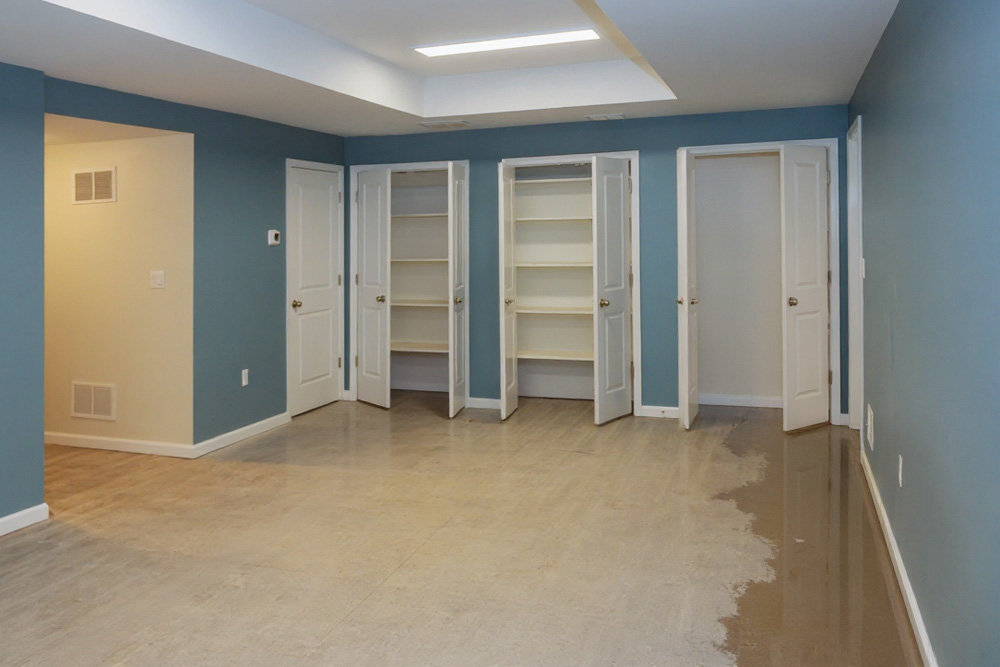
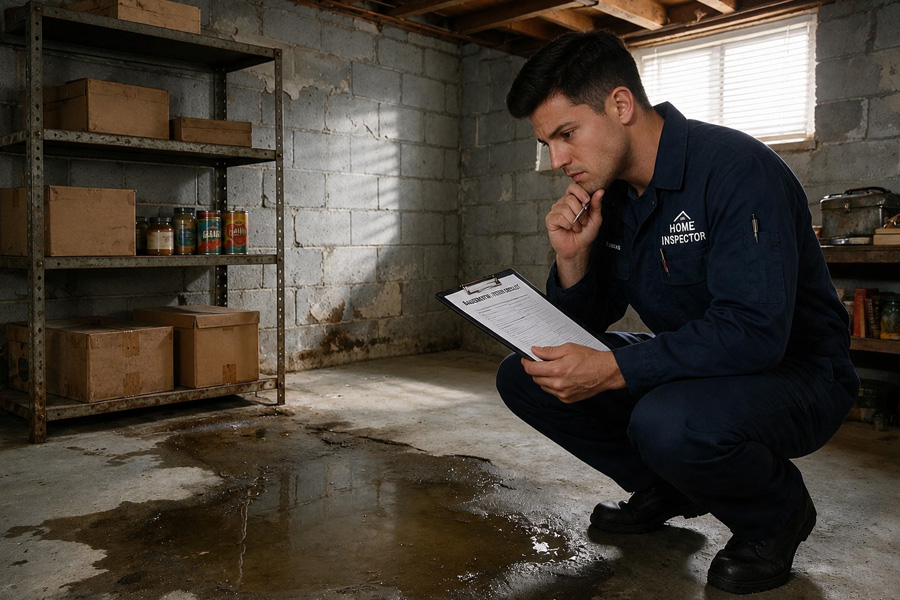
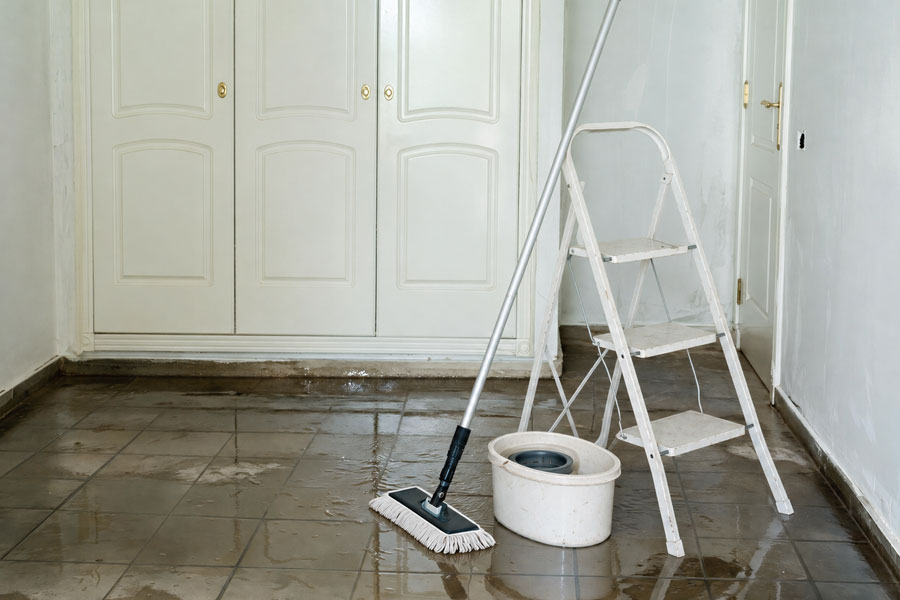
You came downstairs one August morning and the floor was wet. Maybe a dark patch spread out of a corner. Maybe a thin sheet of water covered half the slab.
So you mopped the tile, pulled up the rug, ran the shop vac, and pointed a fan at it for two days. Then it dried. Nothing else happened.
Summer was busy. The whole thing became a story about one bad storm. But that’s not the end of it.
What Actually Happened in Western Pennsylvania in August
August 2026 was not a normal month. Pittsburgh recorded 7.62 inches of rain, according to the National Weather Service monthly climate report. Normal for August is 3.52 inches.
That is more than double the usual amount. It landed within a quarter inch of the all-time August record of 7.86 inches, set in 1987.
The shape of the rain mattered too. We had three days over an inch and six days over a half inch. A typical August brings about one and three. The ground never got a chance to dry out.
For contrast, Pittsburgh recorded 1.58 inches for the whole month last August. Same basement, very different year. If you want the longer view on our regional pattern, we once wrote an article about why summer is Pittsburgh’s wettest season.
So no, it was not just your house that had some leakage.
Heavy Rain Does Not Create a Leak. It Finds One.
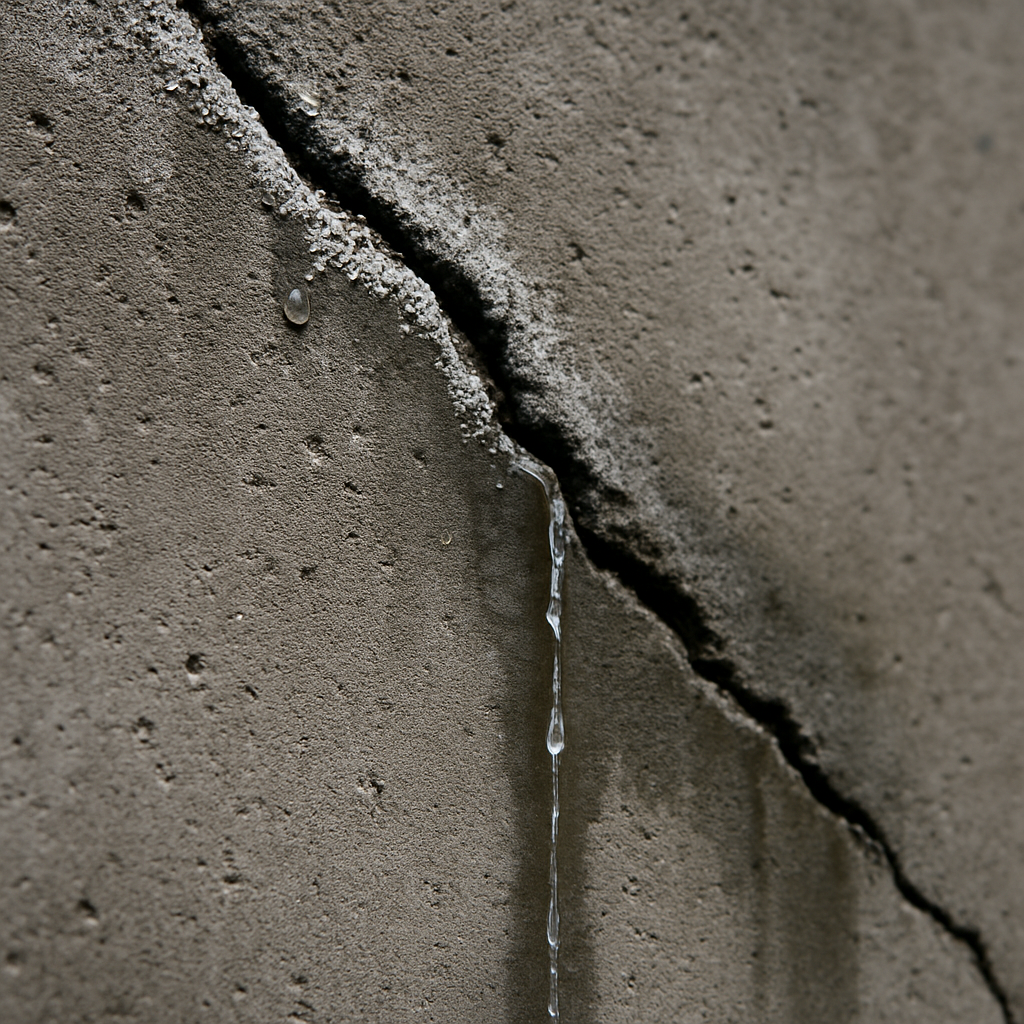
A hard rain does not drill a new hole in your foundation. Water follows paths that were already there: a hairline crack in the block, a gap at the wall and floor joint, a mortar joint that gave up years ago. Those paths existed in June. They existed last year.
What changed in August was volume. Enough water finally pressed on your foundation to push through and reach the floor.
Think of a slow sink drain. It handles normal use fine. Run the faucet wide open and it backs up. Nothing broke. You just found the limit.
“It Only Happens in a Really Heavy Rain”
We hear that sentence almost every week, and homeowners offer it as reassurance. It sounds like good news. The basement handles ordinary rain, so it must be mostly fine.
Here is the harder read. A basement that stays dry in ordinary rain and takes water in a heavy one is not mostly fine. It may simply be letting in water in ways you don’t see every day.
Compare two basements:
- A basement with no water path. Rain falls, soil drains, and nothing reaches the floor. Volume goes up and the basement stays dry.
- A basement with a water path and just enough capacity to hide it. Water gets in, causing mold where you can’t see it, widening the cracks over time, appearing only when the rain is heavy enough to push it into the open.
Both basements look identical in June. They behave very differently in August.
If you saw water this summer, you own the second basement. The path is there, and it’s only a matter of time before even ordinary rains have a wider path to your basement floor.
Why “Once Every Few Years” Is the Wrong Math
Homeowners anchor on how often they see water. Twice in ten years feels like a fluke, so it gets filed under bad luck. Your problem is: the next hard rain is not years away. You know what October and November usually look like in the Pittsburgh area.
More water is on the way.
Here is what matters for fall. The ground is still loaded. Saturated clay holds water for weeks, so it has less room for the next rain. More of that rain runs off, and more of it presses on your foundation walls.
What the Water Was Doing While You Were Not Looking
The water on your floor is the end of the trip, not the beginning.
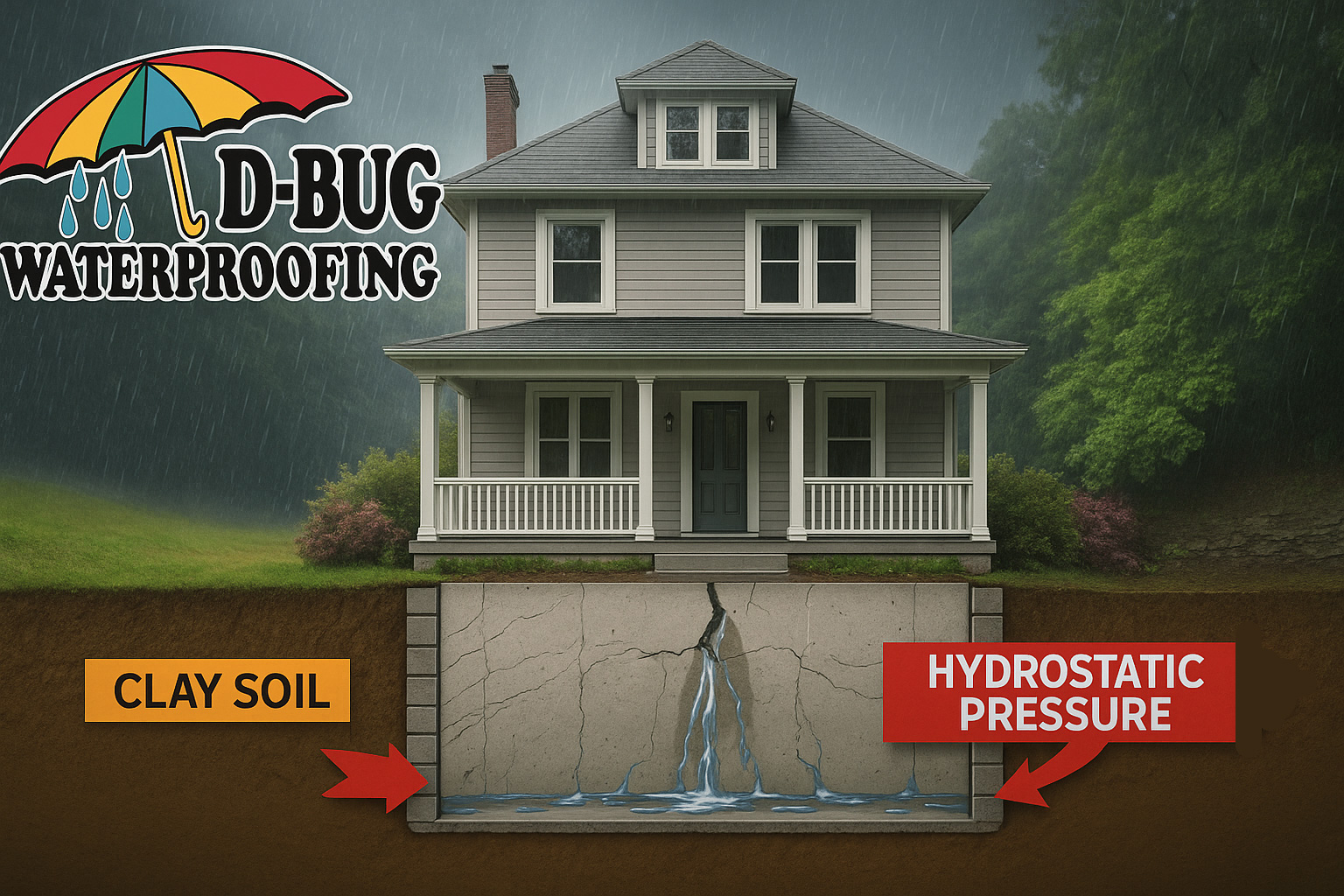
Before you could see enough to mop up, that wagter moved through soil and soaked into your block walls. Concret and block are porous, you know. Saturated soil also pushes on a foundation wall. That force is called hydrostatic pressure, and it widens cracks and bows walls over time.
One wet weekend does not damage a foundation. Repeated cycles do. Step cracks in the block, a wall that leans in, or a crack that grew since spring all belong in a conversation about foundation repair rather than a shop vac.
Where It Came In, and What That Tells You
Look at your basement with fresh eyes. Where the water appeared tells you a great deal about why.
- Along the joint where the wall meets the floor. This is the most common entry point here. It usually means water pressure under the slab, and it points toward an interior French drain paired with a working sump pump.
- Through cracks in a block or poured wall. Water is finding a structural gap. The fix depends on why the crack formed, so diagnosis comes before repair.
- Up through the floor itself. The water table rose above your slab. This is a drainage and pump capacity question.
- Around a window well. The well is holding water against the glass and the wall. Window wells without proper drainage act like buckets.
- Backing up from a floor drain. Either the drain line is blocked, or the system it feeds is overwhelmed.
Each one points to a different fix. That is also why patch-in-a-bucket products disappoint so many homeowners. See why DIY basement waterproofing fixes fail.
The Outside Half of the Problem
A great many wet basements begin out in the yard, and after a record August the evidence is still visible. Walk your perimeter and look for three things:
- Downspouts discharging at the foundation. A roof sheds a remarkable amount of water in one storm. Dumping it two feet from the wall soaks the soil where you least want it. Downspout lead-offs carry it away.
- Grading that fell over the years. Soil settles quietly. Ground that once sloped away from the house may now tip back toward it.
- A yard with nowhere to send water. Standing water days later means the yard is holding it. Yard drainage work and catch basins give that water somewhere to go.
Sometimes the basement fix is mostly outside work. We would rather tell you that than sell you something bigger.
Why September and October Are the Working Window
Now the practical part. Even homeowners who accept all of the above tend to push this to spring. Here is the case for the next several weeks.
- The ground is workable. Exterior work means digging. Fall soil digs cleanly. January soil is frozen on top and soaked underneath, which slows every outside job.
- The weather is settling. Forecasters expect rainfall to move back toward normal after a historic August. Fewer washout days means fewer schedule delays.
- Crews book up fast. The first cold, wet week of fall sends our phones up. Call in September and you pick your timing. Call after the first winter leak and you take what is open.
- You get the winter back. Freeze-thaw season is hard on Western PA foundations. Water in a crack expands when it freezes, and the crack widens. Fixing it now takes that cycle off the table.
Waiting until spring means living with the problem through the hardest season for the exact part of the house you are worried about. Our article on interior French drains and sump pumps against fall rains shows what that protection looks like.
What a Real Evaluation Looks Like
If you have been putting this off since July, the next step is smaller than you think. A D-Bug inspection is free and carries no obligation.
- An experienced D-Bug expert walks the basement with you.
- We check entry points, the block, the slab, the drain, and the pump.
- We go outside and look at grading, downspouts, and where the yard sends water.
- We tell you where the water is getting in and why.
- You get a written scope of the work, with no surprises and no pressure.
Some visits end with a major recommendation. Some end with a much smaller one. Either way you stop guessing. You can read about our approach to basement waterproofing before we knock on the door.
Why Western Pennsylvania Homeowners Call D-Bug
D-Bug Waterproofing has worked on basements here since 1980. That is 45+ years in the same clay soil, the same hillside lots, and the same freeze-thaw winters.
We are family owned, and our own trained crews do the work on every job. We never use subcontractors. The person who diagnoses your basement works for the same company as the person who fixes it.
We know these storms because we have worked through 45+ years of them.
Let Us Take a Look Before the Next Storm
You do not have to decide anything today. You only have to stop guessing about August.
Schedule a free inspection. A D-Bug expert walks your basement, finds where water gets in, and explains what stops it. Honest answers, a clear scope, no pressure.
Call 1-855-381-1528 or request a free quote online. Let us get this handled while the ground is still open.
Water in the Basement After Heavy Rain: Common Questions