 Standing Water in the Yard Is a Warning, Not a Nuisance
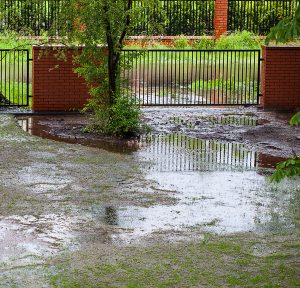
Heavy rain moves through Western Pennsylvania fast. An hour later, that same low spot in your yard is a pond again. The grass there stays soggy for days. Mud washes across the driveway. Water pools against the garage wall.
Standing water is more than an eyesore. It kills grass, breeds mosquitoes, and freezes into a slick patch every winter. It also sits against your house and looks for a way in. Given enough time, it finds one.
A catch basin gives that water somewhere else to go.
Signs Your Yard Needs a Catch Basin
You do not need a soil test to spot a drainage problem. Walk the property after the next hard rain and look for these:
- Puddles that sit in the same spot for a day or longer
- A soggy strip of lawn that never fully dries out
- Mud, mulch, or gravel washing across the driveway or sidewalk
- Water running toward the house instead of away from it
- A low corner that stays spongy even in a dry week
- Ice forming in the same place every winter
- Water showing up in the basement after a storm
 One or two of these means water is collecting. Several means it is already working against your foundation.
What a Catch Basin Actually Is
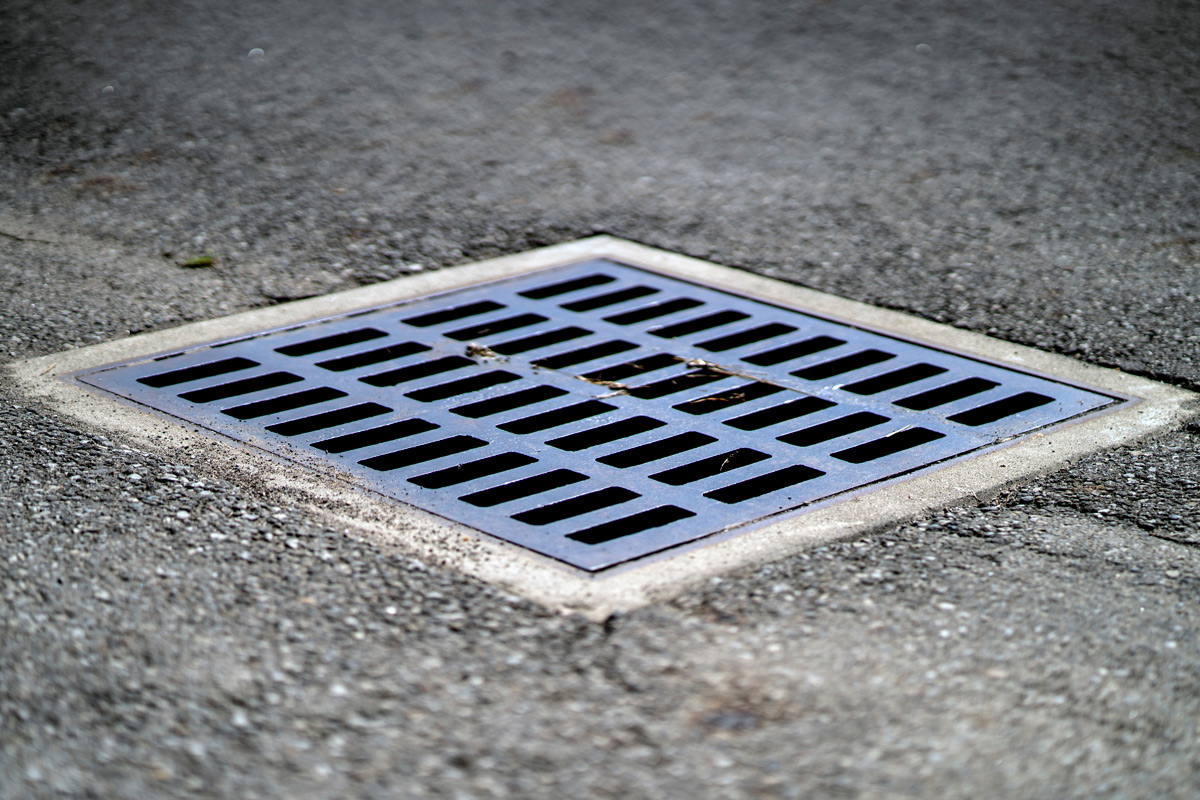
A catch basin is a floor drain for the outdoors. Picture a concrete or heavy plastic box set into the ground, with a metal grate on top sitting level with your yard.
When it rains, water runs across the grate and drops into the box. A lead-off pipe leaves the basin a few inches above the bottom. Water rises to that pipe and flows out. Leaves, sticks, stones, and grit sink below the pipe and stay put.
That gap at the bottom is the whole trick. It works as a debris trap. It keeps the junk your yard sheds from clogging the pipe that carries water away.
Storm Drain or Catch Basin? The Difference Matters
Homeowners use both terms, and the two are related but not identical.
A storm drain is a grate over a pipe. Water goes in and moves straight out. It is simpler, and it works fine where debris is not a concern.
A catch basin adds the box underneath. It moves the same water, but it also catches what the water carries with it.
For most yards around here, the catch basin is the better choice. Our yards shed a lot of leaves every fall, and hillside runoff carries grit and mulch all year. A plain grate over a pipe clogs. A catch basin keeps working, as long as you clean it out now and then.
How D-Bug Installs a Catch Basin
Every job starts with a free inspection. When we can, we walk the property during or right after a rain. That is when the water shows us what it does. We find where it comes from, where it collects, and where it can safely go.
Placement is the entire job. A basin set in the wrong spot moves nothing.
Once we know where it belongs, the work goes like this:
- We dig the hole and set the basin so the grate sits level with the surrounding grade
- We connect the lead-off pipe a few inches above the basin floor
- We backfill, then shape the ground so water runs toward the grate instead of past it
- We haul away the excess dirt when we are finished
Where the water goes next matters too. Depending on your township’s drainage rules, the lead-off may run to a dry well, a storm sewer connection, or a safe daylight point downhill from the house. We sort that out before we dig. Our yard drainage specialists handle the permits and the grading as part of the same job.
When One Basin Is Not Enough
Sometimes a single well-placed basin solves the whole problem. Other yards need more than that. We start with the smallest fix that works, then add only what the water requires.
Surface French drains. A trench 8 to 30 inches deep, lined with filter fabric, filled with gravel around a perforated pipe. It pulls water out of low-lying areas before the water reaches your house. For work along the foundation itself, see our exterior French drain page.
Downspout lead-offs. Roof water is the single largest volume hitting your property. A buried pipe carries it well away from the foundation instead of dumping it at the corner of the house. Read more about downspout lead-offs.
Regrading. Reshaping the slope so the yard sends water where you want it. Often the least invasive fix of all.
Retaining walls. On a hillside lot, a wall holds the slope and hides the drainage line behind it. That work lives with our hardscaping and excavation crews.
Keeping Your Catch Basin Working
A catch basin needs a little attention, and the job is simple enough to do yourself.
Lift the grate and scoop out what has settled in the bottom. Twice a year covers most properties: once after the leaves come down in fall, and again in spring after the thaw.
Watch for the warning sign. If water pools on top of the grate and drains slowly, the basin is full or the lead-off pipe is blocked. Clear it before the next big storm.
How Yard Water Turns Into Basement Water
Western Pennsylvania sits on heavy clay soil. Clay does not drain. It holds water against your foundation walls like a wet sponge, and that water pushes.
Add our freeze-thaw winters. Saturated soil freezes, expands, then thaws and settles. That cycle repeats all season and works on the same walls every year. Cracks widen. Joints separate. Water finds the opening.
This is why yard drainage and basement waterproofing belong in the same conversation. Moving water away at the surface is the straightforward fix. Waiting until it is standing on your basement floor is not.
Why Western PA Homeowners Call D-Bug
We have worked on drainage in Pittsburgh, Westmoreland County, and the surrounding communities since 1980. That is 45+ years of learning what this terrain does with water.
- Our own crews do the work. We never hand your job to a subcontractor.
- We are family owned and locally managed, with our name on every job.
- Inspections are free, and our pricing comes with no surprises.
- We know clay soil, hillside lots, freeze-thaw damage, and older housing stock, because that is all we work on.
- We handle drainage, foundations, and concrete, so one company can solve the whole problem.
Catch basins are one piece of a larger picture. See our full range of yard drainage solutions to understand how the pieces fit together.
Common Questions About Catch Basins
How do I know if I need a catch basin or just better grading?
It depends on where the water sits. If a broad area drains slowly, regrading may be enough. If water collects in one low spot with nowhere to go, that spot needs a basin. A free inspection settles the question in one visit.
How deep does a catch basin go?
Most residential basins sit 18 to 36 inches deep, though the terrain drives the final number. The depth has to let the lead-off pipe run downhill the whole way to its outlet.
Will a catch basin stop water from getting into my basement?
Sometimes, yes. If surface water is pooling near the foundation and soaking down, intercepting it can solve the problem completely. If water is already entering through cracked walls or rising under the floor, you need interior drainage as well. We tell you which situation you have before any work starts.
How often should a catch basin be cleaned out?
Twice a year works for most yards. Clean it after fall leaf drop and again in spring. Properties with heavy tree cover may need a third pass mid-season.
Can you install a catch basin in a finished, landscaped yard?
Yes. We work around established plantings, walkways, and patios every week. We keep the dig tight, haul off the spoil, and restore the surface when we backfill.
Can a catch basin go in a driveway or parking area?
Yes. Driveways and parking pads shed water fast, and a basin set at the low point catches it before it reaches the garage. We match the grate to the traffic it will carry, since a driveway basin needs a heavier lid than one set in a lawn.
Get Your Yard Drainage Looked At
If your yard holds water after every rain, the problem will not settle down on its own. Each storm moves a little more soil and pushes a little more water toward your foundation.
Call D-Bug Waterproofing at 1-855-381-1528 or request a free online quote. You can also reach us through our Contact Us page. We will walk the property, tell you plainly what the water is doing, and explain what it takes to fix it.